

![[sort:pic]](/template/default/images/banner/3-3.jpg)

Lean management provides customers with high-quality services and a visible panoramic view of the prosperous era.
Share
China-U.S. Trade War Ceasefire? U.S. October Container Import Volumes Don't Lie
Introduction
Recently, regarding China-U.S. trade relations, good news and bad news have been intertwined, creating a dizzying situation.
On one hand, the leaders of both countries have reached a new trade agreement, with tariff reductions and port fee suspensions, sending markets into celebration. On the other hand, the freshly released October trade data has thrown cold water on this optimistic sentiment.
The following is the full text.
I. October Data Takes a Dive
Traditionally, October is the "golden month" for global trade. In preparation for the Western holiday shopping season, U.S. ports should be bustling with activity, with containers piled high.
However, the latest data shows that this year's October was unusually "quiet."
Overall Import Situation:
• U.S. seaports handled 2.3 million twenty-foot equivalent units (TEUs) last month • Down 0.1% from September • Below the 2.4 to 2.6 million TEU range that typically marks peak trading activity • This is the second October in the past decade to show a month-over-month decline
China Import Data:
• Up 5.4% from September, reaching 803,901 TEUs • Down 16.3% year-over-year • Year-over-year declines in major categories: • Furniture and bedding: down 13.6% • Toys and sporting goods: down 30.4% • Electrical machinery: down 17.2%
Other Asian Countries:
• India: down 19% month-over-month • Thailand: down 6% month-over-month • Vietnam: down 4.8% month-over-month • Top 10 import source countries overall up 1.3% month-over-month
This is the second rare occurrence in the past decade of an October month-over-month import decline. Behind this chill are three main reasons:
1. The Tariff "Anxiety" Persists: Despite some tariff adjustments, ongoing policy uncertainty hangs like a sword over importers' heads, making them hesitant when placing orders, preferring to wait and see.
2. The "Hangover" Effect: Remember late 2024? Fearing strikes and new tariffs, everyone went on a "stockpiling" frenzy, placing orders months in advance. The consequence of this "front-loading" is that current demand has been severely depleted—warehouses are full, so orders naturally decreased.
3. Global Demand Flashing Red: Not just from China, but import volumes from India, Thailand, and Vietnam are also declining. This indicates that the problem isn't just between China and the U.S., but more likely reflects a global economic slowdown, with consumer appetite generally diminished.
As industry experts have predicted, in the first quarter of 2026, global trade may face "even steeper declines." The winter may have just begun.
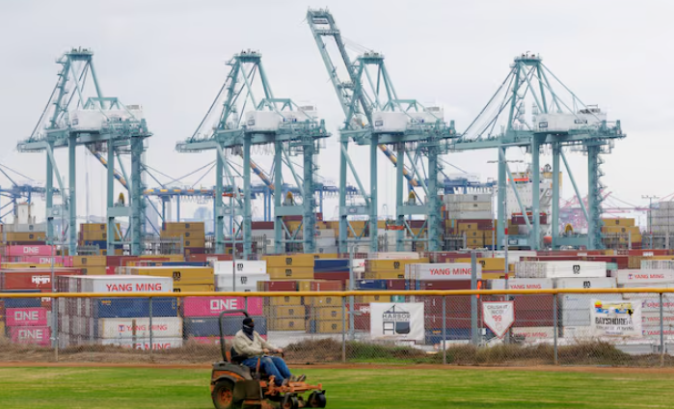
II. Can the New Trade Agreement "Save the Market"?
In early November, China and the United States reached a new trade agreement, hitting the "pause button" on tensions.Let's review the agreement's content.
1. Tariffs Reduced
The U.S. reduced the "fentanyl tariff" on Chinese imports from 20% to 10%, while committing not to impose new reciprocal tariffs for one year. In response, China also suspended all previously announced retaliatory tariffs.
2. Port Fees Suspended
Both sides agreed to suspend the mutual imposition of punitive port fees in the maritime and logistics sectors, providing tangible relief to shipping companies.
3. "Chokehold" Loosened
China agreed to suspend export controls on critical minerals such as rare earths, gallium, and germanium; the U.S. also suspended further restrictions on some Chinese tech companies.
4. "Shopping Cart" Filled
China committed to purchasing large quantities of U.S. soybeans and other agricultural products.
This agreement is undoubtedly a shot in the arm. It has greatly eased market tensions and provided businesses with a valuable breathing space and a relatively clear policy environment. In the short term, this helps stabilize bilateral trade flows and prevents further deterioration of relations.
Meanwhile, the existing 10% tariff imposed under the International Emergency Economic Powers Act remains in effect, with the Supreme Court currently reviewing its legality.
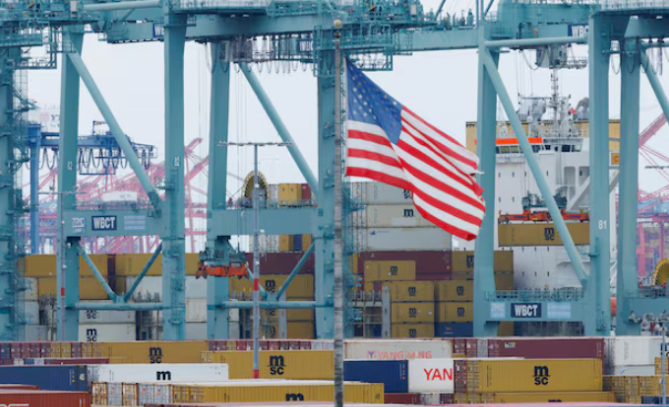
Short-term Forecast: The National Retail Federation and Hackett Associates expect U.S. import volumes to slow in November and December, potentially falling below 2 million TEUs, as holiday merchandise reaches store shelves and inventories remain adequate.
Medium-term Forecast: Ben Hackett, founder of Hackett Associates, stated: "Our trade outlook is for imports to be slightly lower this year than in 2024, with an even steeper decline in the first quarter of 2026."
The market may stabilize in the short term, but the first quarter of 2026 could face greater downward pressure. This has significant implications for the global trade landscape, manufacturing layout, and economic growth prospects. For policymakers and businesses, finding a balance between protectionism and globalization will be a key challenge going forward.
In this critical moment when tariff policies are rapidly changing and supply chains are filled with uncertainty, a professional and reliable partner is essential.
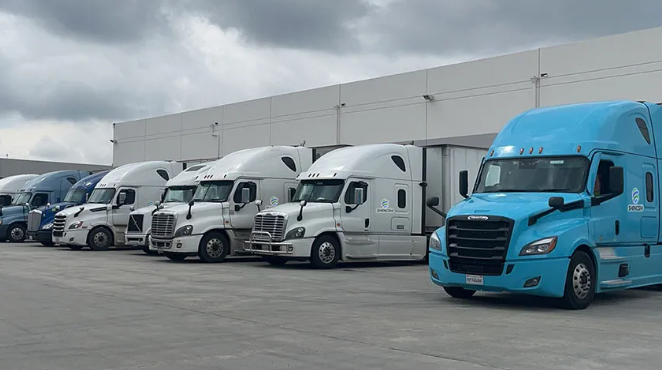
As a service provider integrating customs clearance and trucking, we have over 50 years of customs clearance experience and our own team of green card-holding Chinese customs clearance professionals. We specialize in U.S. last-mile customs clearance and transshipment, Amazon FBA logistics, and one-stop services for third-party warehouses, with our headquarters located in Los Angeles.
In this challenging tariff environment, choosing us means choosing professionalism, efficiency, and peace of mind. Shengshi Group will go all out, using our professional capabilities to safeguard your goods and help you move forward steadily in the complex and ever-changing international trade market, overcome difficulties together, and expand a broader business landscape!
If you need assistance, please feel free to contact us through our backend at any time.
 Message Consultation